Liam the Vegan Is Coming Soon!
November 4, 2026!
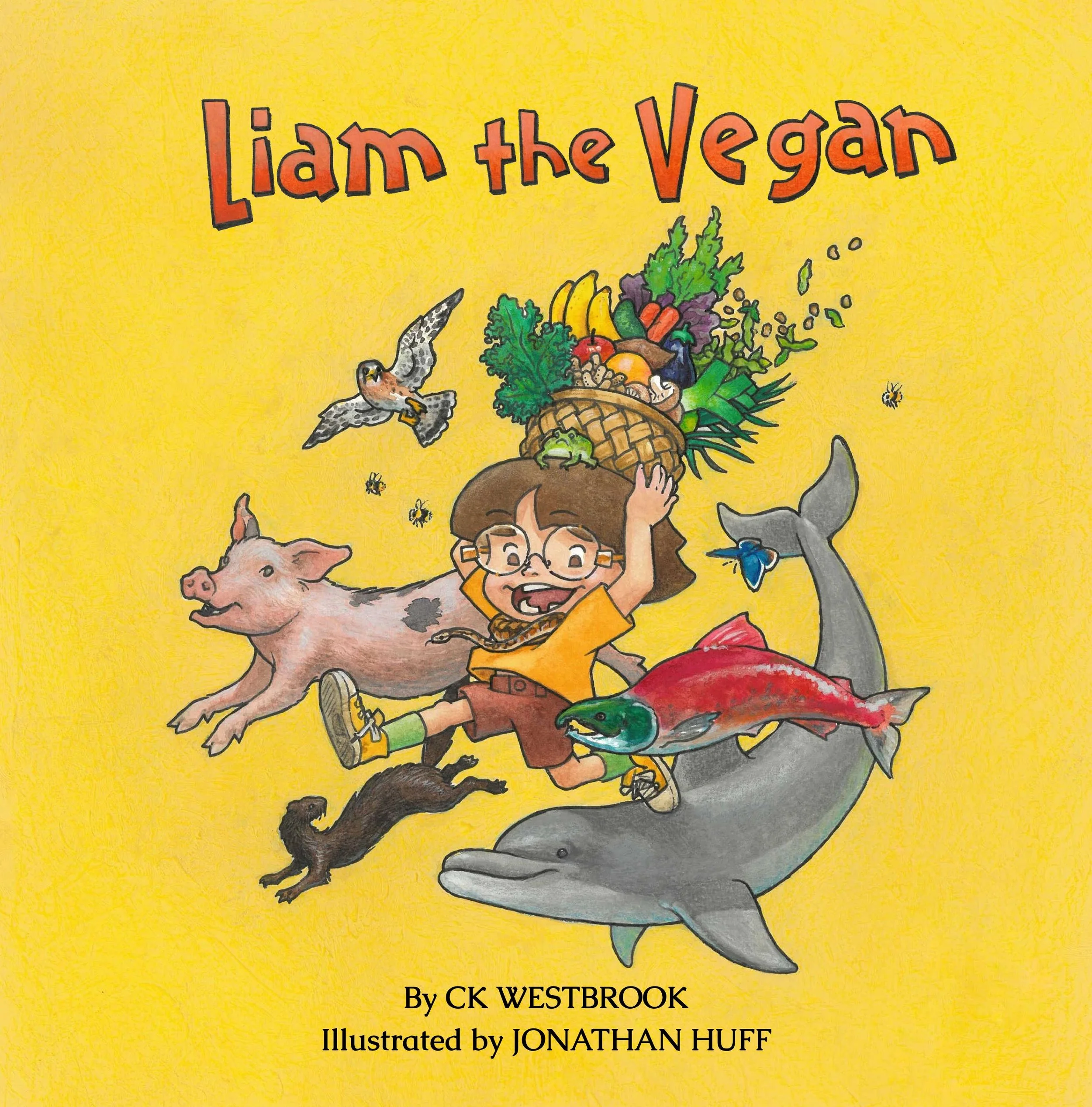
Liam is in the second grade, and he loves all animals. When he moves to a new town and a new school, his classmates are surprised and curious about his diet. At first, they disapprove, but when they understand his choices, they love and support him.
No AI was used to write or illustrate this book.
Recommended for ages 3 – 7, but people of all ages may appreciate the message.
Hardback ISBN: 979-8-9968070-0-0
Paperback ISBN: 979-8-9968070-1-7
E-Book ISBN: 979-8-9968070-2-4
CK Westbrook is an environmentalist, an Institute for Integrative Nutrition Certified Health Coach, and the author of two science fiction series, “The Impact Series” and “Before the Impact.”
Jonathan Huff is a professional illustrator and lifelong artist, often found drawing live caricatures and cycling through Washington, D.C.
For more information about Jonathan Huff, use his QR code.
Review:
Liam the Vegan is a warm, engaging children's book that addresses an important subject through a story about friendship, empathy, and the need to belong. When Liam moves from Maryland to Tennessee and starts a new school, he faces the familiar anxieties of being the new child. Although he quickly befriends Jake, their friendship is challenged when Liam's vegan diet becomes a source of ridicule among his classmates. What begins as a seemingly ordinary lunchtime disagreement develops into a valuable lesson about respecting differences and treating others with kindness.
One of the book's strengths is its recognition that children can feel vulnerable when their choices or family practices differ from those of their peers. Liam knows why he chooses not to eat animals, but he struggles when other children question and criticize him. The situation becomes especially painful when a lunchroom monitor reinforces the children's misconceptions rather than helping them understand Liam's perspective. Through this episode, Westbrook illustrates how easily an adult's response can compound a child's feelings of isolation—and how important it is for adults to model fairness, sensitivity, and respect.
The story's resolution offers a constructive alternative. Liam's mother explains the values behind veganism while also helping the children recognize the larger issue: no child should be teased or excluded because of personal or family choices. Her comparison to food allergies and religious dietary practices invites young readers to consider how they might respond if a classmate's differences were more familiar to them. Ultimately, Jake's apology and renewed friendship with Liam reinforce the book's central message that understanding and compassion are more important than conformity.
Jonathan Huff's illustrations are an important part of the book's appeal. The images help young readers connect with the characters' experiences and feelings, reinforcing the narrative's message in a way that words alone cannot.
Liam the Vegan is particularly useful as a starting point for conversations about animal welfare, environmental responsibility, food choices, and, most importantly, how we treat people whose lives differ from our own. Its message extends beyond veganism. Children may encounter differences involving culture, religion, health, family traditions, or personal preferences, and the book encourages them to respond with curiosity rather than judgment.
I recommend Liam the Vegan to parents, teachers, and others who want to encourage empathy and respect in children. CK Westbrook has created a story with a meaningful social message: children do not have to share one another's choices to respect one another, and every child deserves to feel welcome. In reminding readers that all children long to belong, the book offers a timely lesson in kindness that reaches well beyond the lunchroom.
Dr. Karyne Messina is a psychoanalyst, author, and Training and Supervising Analyst at the Washington Center for Psychoanalysis, and the editor of Routledge’s Psychoanalysis, Technology and the Future book series.